

Sep 2026 Best Professional Painting Services Sydney 2026
Table of Contents
- What to Look for in Professional Painting Services
- Quick Comparison: Sydney’s Top Painting Providers
- The Colour Palette: Meticulous Craftsmanship and Heritage Expertise
- Upscale Painting: Dulux-Backed Warranty and Fixed Pricing
- Mi Painting: Broad-Scope Residential and Commercial Coverage
- Panther Painter: Preparation-First Approach for Lasting Finishes
- Questions to Ask Before Hiring House Painters
- Understanding the Average Cost of House Painting
- Frequently Asked Questions
Last Updated: September 16, 2026
What to Look for in Professional Painting Services
A good painting job is 80% preparation and 20% paint, which is why the cheapest quote is rarely the best value. When you’re comparing painting services, the difference between a finish that lasts ten years and one that peels in eighteen months comes down to how the crew preps, protects, and documents the work.
Quick Picks:
- Best Overall: The Colour Palette, 20+ years, heritage and commercial expertise
- Best for Warranty Cover: Upscale Painting, Dulux-backed 5-year workmanship warranty
- Best for Broad Scope: Mi Painting, full residential and commercial coverage
- Best for Prep-First Work: Panther Painter, meticulous surface preparation
Quick Comparison: Sydney’s Top Painting Providers
Every provider below offers a free quote and works on a project basis. Here’s how they stack up on the factors that decide whether your paint job survives its first harsh summer.
| Provider | Best For | Standout Strength | Pricing Model |
|---|---|---|---|
| The Colour Palette | Heritage and commercial projects | 20+ years, colour styling included | Project-based quote |
| Upscale Painting | Warranty-conscious homeowners | Dulux-backed 5-year workmanship warranty | Fixed price, in writing |
| Mi Painting | Broad residential and commercial scope | Full-service prep and repair | Project-based quote |
| Panther Painter | Prep-focused residential work | Detailed surface preparation | Project-based quote |
| Luxury Painting Services | Prestige homes and penthouses | Bespoke finishes | Project-based quote |
The Colour Palette: Meticulous Craftsmanship and Heritage Expertise
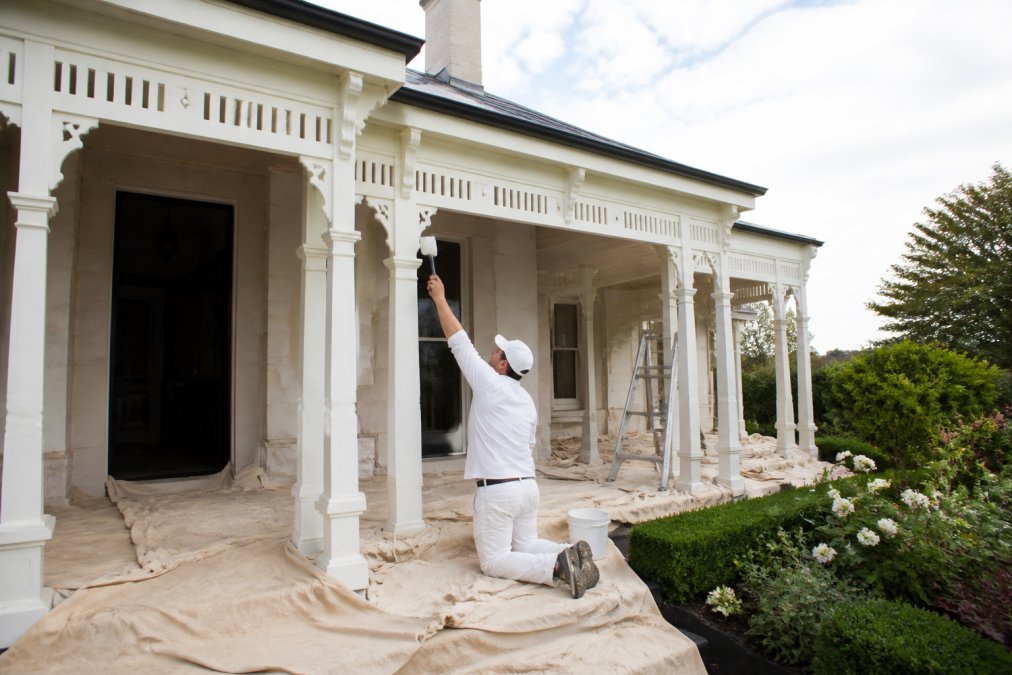
For heritage homes and businesses that can’t afford downtime, The Colour Palette offers expert services. The team brings over 20 years of experience across residential, commercial, film set, and museum projects, which means they’ve handled everything from delicate heritage trim to fast-turnaround cafe fit-outs.
Pros and Cons
Pros:
- Over 20 years of industry experience
- Expertise spanning heritage, commercial, film, and museum projects
- Comprehensive service including preparation, colour styling, and maintenance
- Meticulous protection of floors and furniture
- Specialised services like wallpaper removal and kitchen cupboard spray painting
Cons:
- Premium positioning means they won’t be the cheapest quote you receive
- Specialised services may require longer lead times during peak season
Upscale Painting: Dulux-Backed Warranty and Fixed Pricing
The complimentary colour consultation is a genuine inclusion rather than an upsell, and the Dulux certification gives you a clear quality benchmark. The trade-off is that pricing is bespoke: you’ll need a consultation before you see a number, so it’s less suited to anyone who wants a rough figure over the phone.
Pros and Cons
Pros:
- Dulux-backed 5-year warranty on workmanship
- Fixed price agreements provided in writing
- Complimentary professional colour consultation
Cons:
- Pricing requires a consultation before you see figures
Mi Painting: Broad-Scope Residential and Commercial Coverage
The established local presence helps with scheduling and accountability, though there’s no public price list, so every job starts with an enquiry. If you’re after a single provider for a strata building and a retail fit-out, this is a sensible shortlist entry.
Pros and Cons
Pros:
- Full-service interior and exterior painting
- Professional surface preparation and repair
- Versatile across different property types
Cons:
- No public price list available
Panther Painter: Preparation-First Approach for Lasting Finishes
For residential clients who’ve been burned by peeling paint before, that focus is worth paying for. The catch is that estimates require direct contact, so there’s no instant online pricing.
Pros and Cons
Pros:
- Emphasis on long-lasting results through preparation
- Professional and experienced painting team
- Reliable project scheduling
Cons:
- Requires direct contact for project estimates
Questions to Ask Before Hiring House Painters
The questions that separate a professional outfit from a risky one are about licensing, insurance, preparation, and remediation, not price. Ask them before you sign anything, and get the answers in writing.
Licensing, insurance, and compliance
- Are you licensed for the work? Residential building work above the statutory threshold must be carried out by a holder of a contractor licence issued by the state building authority, and the licence number should appear on the quote and contract. Ask for it and verify it on the regulator’s public register.
- Do you hold current public liability cover? Ask for the certificate of currency and check the expiry date. A common minimum is $10 million, but confirm the figure rather than assuming it.
- Do you carry workers’ compensation cover for your crew? If a painter is injured on your property and the business is not covered, the exposure can land on you as the homeowner.
- Will you provide a certificate of currency for both policies before work starts? A provider who hesitates on this question is telling you something important.
Preparation and methodology
- How will you prepare the surfaces? Look for a specific answer: washing, sanding, filling, gap sealing, mould treatment, and spot priming. “We just paint over it” is not a preparation method.
- Which primer and topcoat products will you use, and how many coats? Ask for the brand and product line in writing. Two coats of a quality washable finish behave very differently from one coat of a budget product.
- How will you protect floors, furniture, and landscaping? Drop sheets, masking, and furniture relocation should be described in the quote, not promised verbally.
- How will you handle lead paint or asbestos-containing substrates on older properties? Pre-1990s homes can contain both. A professional will know when to stop and call in a licensed removalist rather than sanding through it.
Strata and body corporate approvals
If you live in a strata scheme, painting the exterior, common property, or anything visible from outside usually requires approval before a brush is lifted. The process typically runs through the owners corporation or strata committee, and may require a special resolution depending on the scheme’s by-laws and the scope of works. Ask your painter:
- Have you worked on strata schemes under this state’s strata management legislation before?
- Can you provide a scope of works and colour schedule suitable for a committee to review and minute?
- Are you insured and inducted for common-property work, including any height or access requirements?
- Can you coordinate with the strata manager on scheduling, notifications, and access to common areas?
Contract, payment, and remediation
- What does the payment schedule look like? A deposit plus progress payments tied to milestones is normal. Large upfront cash payments are not.
- Is there a cooling-off period? For residential building work above the statutory threshold, a cooling-off period generally applies to the contract. Confirm the specifics in writing.
- What is the workmanship warranty, and what does it actually cover? Distinguish between the manufacturer’s product warranty and the painter’s own workmanship warranty, they are different things and cover different failures.
- What happens if you’re unhappy with the finish? Ask for the defects process: who inspects, in what timeframe, and how touch-ups are scheduled.
- Will there be a final walkthrough and touch-up visit? This should be included, not treated as a favour.
References and track record
Ask for two or three references from jobs similar to yours, a heritage renovation, a strata repaint, or a commercial fit-out, and actually call them. Ask what went wrong as well as what went right. Every project has a moment where something needs fixing; how the painter handled it tells you more than the finished photos.
Never accept a quote that omits the licence number, the insurance details, or the number of coats. Those three omissions are the strongest predictors of a job that fails within two years.
Print this list, ask every shortlisted painter the same questions, and compare the written answers side by side. The provider who answers all of them clearly and without hesitation is the one worth hiring, regardless of whether they were the cheapest quote.
Understanding the Average Cost of House Painting
Painting is priced per square metre of paintable surface area, not per bedroom or per floor plan, and the rate you’re quoted reflects three variables: surface condition, access difficulty, and the prep-to-paint ratio the crew is willing to commit to.
How painters actually calculate a quote
A professional quote is built from four line items, and you should ask to see all four:
- Preparation, sanding, filling, gap sealing, sugar-soap washing, mould treatment, and masking. This is usually the largest single line on an exterior repaint and the first one a cheap quote quietly deletes.
- Materials, primer, sealer, topcoats, and consumables (tape, drop sheets, sandpaper). Premium low-VOC and washable finishes sit at the top of this line.
- Labour, measured in painter-hours per square metre. A single-storey interior in good condition moves fast; a double-brick exterior with flaking paint and high windows does not.
- Access and make-good, scaffolding, boom lift hire, height safety, and cleanup. Anything above two storeys typically triggers additional access costs.
Typical rate ranges to expect
As a rough planning guide, interior repaints are commonly quoted per square metre of paintable surface, and exterior repaints higher because of weather exposure, access, and heavier prep. Heritage and prestige finishes sit above those bands. These are planning ranges, not quotes: the only figure that matters is the one written on your own scope of works.
Ask for the quote broken into preparation, materials, labour, and access. A provider who can only give you a single lump sum is either guessing or hiding where the corners are being cut.
What pushes a quote up or down
- Surface condition. Sound, previously painted surfaces cost less. Peeling, chalky, or bare timber costs more because prep and primer consumption rise.
- Colour change. Going from a dark feature wall to white, or vice versa, often needs an extra coat, sometimes two.
- Ceilings and trim. Ceilings, cornices, skirting, architraves, and doors are slow, fiddly work and are frequently quoted separately from wall area.
- Occupancy. Empty properties are faster to mask and move through than furnished, occupied homes.
- Season. Peak spring and pre-Christmas periods attract a scheduling premium; quieter winter windows can be more flexible on price.
What a fair quote should include
A written quote should state the scope room by room or elevation by elevation, the number of coats, the paint brand and product line, the prep steps included, the access equipment provided, the payment schedule, and the workmanship warranty period. If two quotes differ by thousands of dollars, the difference is almost always in the prep line and the number of coats, not in the paint tin.
Getting an accurate figure
Because pricing depends on the actual condition and size of your property, request an on-site or detailed video quote rather than relying on a phone estimate. Walk the painter around, point out cracks, water stains, and any previous dodgy repairs, and ask them to note in the quote how each will be addressed. That single conversation is what turns a vague range into a number you can hold them to.
Frequently Asked Questions
How much do painters charge per hour in Sydney?
Hourly rates for painters vary based on the provider’s experience, the project’s complexity, and whether it is residential or commercial work. Most professional painting services quote per project rather than hourly, especially for larger jobs. For an accurate figure, request a free quote from a licensed contractor who can assess your specific property and provide a fixed price.
What questions should I ask before hiring house painters?
Ask about their licence and insurance, whether they provide a written fixed-price agreement, and what surface preparation is included. Request references from similar projects, confirm the warranty terms, and clarify who will manage the project day to day. Also ask how they protect floors and furniture, and what happens if you are not satisfied with the finish. A reputable painting service will answer all of these without hesitation.
What is included in a standard professional painting quote?
A standard quote from a professional painting service typically covers surface preparation, minor repairs, priming, and the application of high-quality paint. It should also include protection for floors and furniture, cleanup, and a warranty on workmanship. Some providers include a colour consultation. Always confirm whether the quote is fixed or subject to change, and whether it covers materials, labour, and any specialist work like spray painting.
How do I verify a painter’s licence and insurance?
Ask for their contractor licence number and check it against the NSW Fair Trading public register. Request a certificate of currency for public liability insurance and workers compensation. A licensed and insured painter will provide these documents without delay. This protects you from liability if an accident occurs on your property and ensures the work meets Australian safety standards.
What is the difference between residential and strata painting services?
Residential painting covers individual homes, interiors, exteriors, and features like kitchen cupboard spray painting. Strata painting involves common property in apartment buildings and requires coordination with the owners corporation, adherence to by-laws, and often specialised access equipment. Strata projects also have legal requirements around approvals and colour schemes. Choosing a provider with strata experience ensures compliance and minimal disruption to residents.