

Sep 2026 Painting Heritage Homes in Inner West: 2026 Guide
Table of Contents
- Why Heritage Home Painting in the Inner West Demands a Different Approach
- Council Requirements for Painting Heritage Buildings: What You Need to Know
- Lead Paint and Breathable Paint Systems: Safety Essentials
- Heritage Colour Schemes for Federation Homes and Victorian Terraces
- Preparation Techniques for Period Homes: Sanding, Priming and Surface Repair
- The Cost of Painting a Heritage House: What Affects Your Quote
- DIY vs Professional Heritage Restoration: Risks and Realities
- Maintenance Schedules and Sustainability for Heritage Exteriors
- Frequently Asked Questions
Last Updated: September 14, 2026
Why Heritage Home Painting in the Inner West Demands a Different Approach
Painting heritage homes in inner west streets is not the same job as painting a modern brick veneer, and that applies to painting heritage homes in inner west streets too. A Federation bungalow in Marrickville or a Victorian terrace in Annandale was built with materials that need to breathe, and the wrong coating traps moisture and rots the timber from the inside out.
At The Colour Palette, we’ve spent over 20 years in the industry, and the biggest mistake we see is treating a heritage home like any other repaint.
Heritage homes here fall into two categories: heritage-listed properties and those inside a conservation area. Both come with council requirements and need breathable paint systems rather than modern acrylic seals.
Get the approach right and a heritage repaint can last far longer than a standard exterior job.
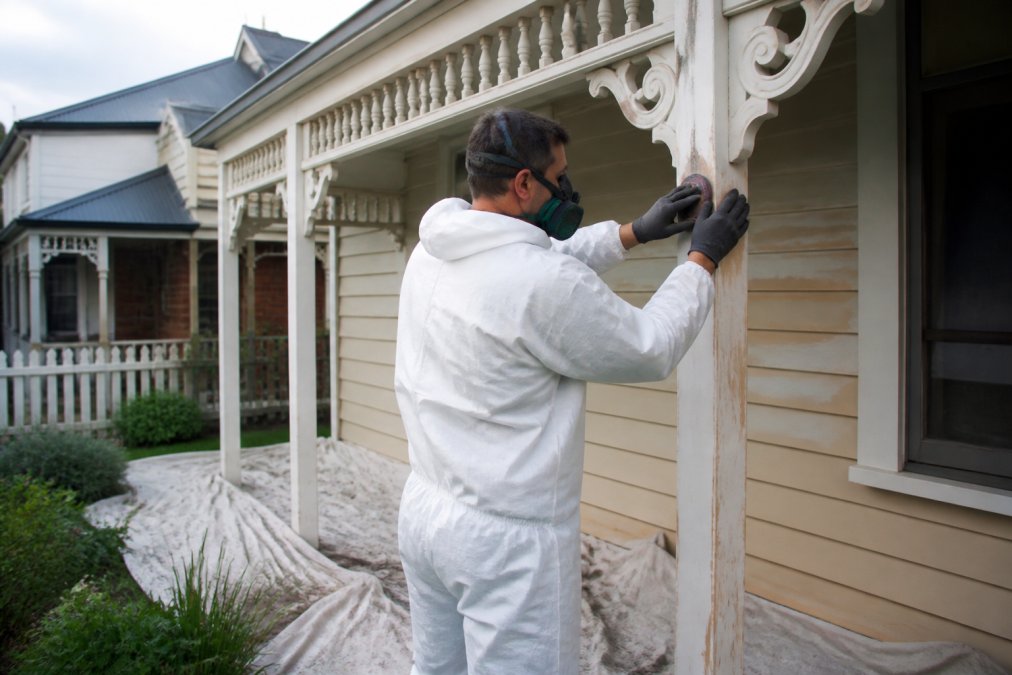
Council Requirements for Painting Heritage Buildings: What You Need to Know
Council requirements for painting heritage buildings depend on whether your property is individually heritage-listed or sits inside a conservation area, and whether the work is exempt development or requires consent. Most homeowners assume repainting is always exempt. It usually is, but the exceptions are where projects go wrong.
The Planning Framework Behind the Rules
Heritage controls sit inside the environmental planning framework. Individual listings are recorded on the State Heritage Register or a council’s local environmental plan, while conservation areas are mapped precincts where the collective streetscape is protected. A heritage item and a property inside a conservation area are treated differently, and the same house can be both.
Heritage-Listed vs Conservation Area Properties
A heritage-listed property is individually recognised for its architectural or historical significance. External changes, including paint colour on visible elevations, typically require consent.
A conservation area property sits within a precinct where streetscape character matters. Repainting in a period-sympathetic colour is normally exempt development, but dramatic changes, or work altering original fabric, can still trigger consent.
When You Need a Development Application
You’ll generally need a development application (DA) when:
- The property is heritage-listed and you’re changing exterior colours on a visible elevation
- You’re altering decorative trim, render, joinery, or original timberwork rather than just recoating it
- The work affects the visible streetscape character of a conservation area
- You’re replacing original fabric, windows, doors, verandah posts, rather than repairing it
Exempt vs Consent: The Practical Test
A useful rule of thumb: recoating the same surface in a colour matching the existing or a documented period scheme is usually exempt. If you’re changing the colour or finish, or touching original fabric, assume consent is required until a heritage advisor says otherwise.
How to Check Before You Book a Painter
- Pull your property’s listing status from your council’s online planning portal or the state heritage register.
- Check whether your address falls inside a mapped conservation area.
- Request written advice from your council’s heritage advisor, most councils offer this free.
- Ask the advisor to confirm in writing whether your colour and scope are exempt or require consent, and keep that advice on file as your defence if the work is later questioned.
Unauthorised work on a heritage-listed property can attract enforcement action, including orders to reverse the work at your own cost. Reversing a paint scheme on a two-storey terrace, including scaffolding, stripping, and repainting, routinely costs more than the original job. Written advice from a heritage advisor before you start is the cheapest insurance available.
What This Means for Your Painter
A heritage-experienced painter should be able to discuss whether your property is listed, whether it sits in a conservation area, and whether your scope is likely exempt.
Check with your council’s heritage advisor before booking a painter, far cheaper than reversing unauthorised work.
Lead Paint and Breathable Paint Systems: Safety Essentials
Lead paint is the hidden hazard in almost every pre-1970s home. Disturbing it through sanding, scraping, or heat-gun stripping releases toxic dust and fumes that contaminate soil, gardens, and neighbouring properties. Lead-safe work practices are not optional on a heritage repaint, they’re the difference between a compliant job and a public health problem.
Identifying Lead Paint Before You Disturb It
Lead can’t be identified by looking at it. Paint sits in layers, and a 1990s topcoat can hide a 1950s lead-based primer. The only reliable approach is testing before any abrasive work begins.
Two testing methods are commonly used:
- Chemical test kits, a swab that changes colour in the presence of lead. Fast and inexpensive, but only tests the layer it reaches, so multiple layers should be checked.
- Laboratory analysis, a paint chip or dust sample sent to an accredited laboratory. Slower and more expensive, but definitive, and the appropriate choice when a scope of work is large or a dispute is possible.
Test every distinct paint layer on each elevation, plus trim, joinery, and any surface to be sanded, scraped, or heat-stripped.
Lead-Safe Work Practices in Practice
Professional lead paint abatement follows a defined sequence:
- Test before disturbing. No sanding, scraping, or heat work until layers are confirmed.
- Contain the work area. Plastic sheeting sealed at edges, with negative air pressure where dust generation is high, so dust can’t migrate to gardens or neighbouring properties.
- Suppress dust at the source. Wet sanding, wet scraping, and chemical strippers beat dry sanding and heat guns, dry sanding lead paint is the most common cause of contamination.
- Protect people. Lead-rated respiratory protection, disposable coveralls, and boot covers, with change-down procedures so dust doesn’t leave on clothing.
- Clean by wet methods. HEPA vacuuming then wet wiping, never dry sweeping or compressed air.
- Dispose of waste correctly. Contaminated waste, drop sheets, and PPE go into sealed bags disposed of through a licensed facility, not the household bin.
Never let a painter dry-sand a pre-1970s home without lead testing first. The dust contaminates soil, gardens, and neighbouring properties, and cleanup costs far more than the testing would have. In severe cases, contaminated soil must be removed and replaced, a landscaping bill that dwarfs the painting quote.
Why Breathable Paint Systems Matter
Breathable paint systems matter just as much as lead safety, for a different reason. Period homes were built without cavity membranes or modern damp-proof courses. Moisture moves through render, mortar, and timber by design, escaping outwards, the building was engineered to dry outwards.
Modern acrylic and elastomeric paints form a tight film that traps moisture inside a period wall (historicengland.org.uk). The moisture finds the weakest point, a paint edge, joint, or section of timber, and pushes the coating off from behind, causing blistering, peeling, and eventually timber decay and mortar erosion.
The right approach uses breathable primers and topcoats, mineral, lime-based, or vapour-permeable systems, that let the substrate dry out while still repelling rain. The trade-off is real: they cost more per litre, cure slower, and offer a narrower colour range. On a heritage home it’s often worth it, because the alternative can fail within a few years and take original fabric with it.
Matching the System to the Substrate
Not every surface on a heritage home wants the same product:
- Lime render and mortar, breathable mineral paint, never a sealed acrylic.
- Bare or weathered timber, breathable primer followed by a breathable topcoat.
- Previously painted timber in sound condition, compatible breathable topcoat over a prepared surface.
- Sandstone, breathable, vapour-permeable systems only; sealing sandstone traps salt and causes spalling.
Heritage Colour Schemes for Federation Homes and Victorian Terraces
Heritage colour schemes for Federation homes and Victorian terraces follow different logic. Federation homes favour warm, earthy tones. Victorian terraces lean toward richer, darker palettes with strong contrast on decorative trim.
Step-by-Step Colour Palette Selection
Getting the colour right is crucial. Our process:
- Identify your home’s era and style. Federation, Victorian, and Interwar homes each have distinct palettes.
- Check historical records. Many councils hold heritage colour schedules for specific streets.
- Match the trim first. Decorative trim defines the character; body colour supports it.
- Test on site in natural light. Colours shift between a swatch and a rendered wall.
- Apply sample patches. One square metre minimum, viewed at different times of day.
- Confirm breathability. The colour is useless if the system can’t breathe.
Sample patches need to be at least one square metre and viewed across a full day. A colour that looks perfect at 9am can look completely wrong in afternoon sun.
Preparation Techniques for Period Homes: Sanding, Priming and Surface Repair
Surface preparation is where heritage painting succeeds or fails, roughly 80% of a quality job happens before the first topcoat (Prepare interior surfaces).
For period homes, this means:
- Careful sanding and scraping of loose and flaking paint
- Repairing rotten timber with appropriate fillers
- Priming bare timber with breathable primer
- Filling cracks in render and mortar
- Replacing failed putty around window frames
High-pressure cleaning is sometimes appropriate for exterior render, but too much pressure strips soft mortar and damages sandstone.
A common mistake is skipping primer on bare timber. Primer bonds topcoat to substrate and blocks moisture both ways; without it, topcoat peels within a couple of years.
The Cost of Painting a Heritage House: What Affects Your Quote
The cost of painting a heritage house varies widely because heritage work is not a standard repaint. Factors that push the price up:
- Lead paint management adds testing, containment, and disposal
- Detailed preparation on decorative trim takes far longer
- Breathable paint systems cost more than standard acrylics
- Access challenges on steep sites, double-storey terraces, and narrow side passages
- Heritage colour matching and sample application
- Council compliance paperwork where required
Because every heritage property is different, we quote each job individually rather than from a flat rate. For a current quote, request an online quote and we’ll assess your specific requirements.
| Factor | Impact on Cost | Why It Matters |
|---|---|---|
| Lead paint management | High | Testing, containment, disposal |
| Detailed preparation | High | Decorative trim takes time |
| Breathable paint systems | Medium | Specialist products cost more |
| Access challenges | Medium | Scaffolding, narrow passages |
| Colour matching | Low to medium | Sample application and testing |
DIY vs Professional Heritage Restoration: Risks and Realities
DIY heritage restoration looks tempting until the first problem. The risks stack up quickly:
- Lead exposure if you sand without testing
- Irreversible damage from wrong paint systems
- Council penalties for unauthorised changes to listed properties
- Colour choices that clash with the streetscape and devalue the property
- Warranty issues if a DIY job fails and needs redoing
Professional heritage painters bring lead-safe practices, breathable system knowledge, and colour expertise, plus insurance and workmanship backing.
The real difference comes down to risk. On a modern home, DIY mistakes are cheap to fix. On a heritage property, they can cost tens of thousands to reverse.
On heritage homes, the cost of fixing a failed DIY paint job almost always exceeds the cost of hiring a professional the first time.
Maintenance Schedules and Sustainability for Heritage Exteriors
A heritage exterior repaint isn’t a one-off job. The right maintenance schedule protects the investment and avoids costly repairs.
A practical schedule looks like this:
- Annually: Inspect for flaking, cracking, and moisture ingress
- Every 2-3 years: Touch up high-wear areas like window sills and doors
- Every 7-10 years: Full exterior repaint with breathable system
- After severe weather: Check for water damage and address quickly
Sustainability matters too. Breathable systems extend the life of timber and render, reducing waste and preserving original materials, repairing rather than replacing is the most sustainable choice on a heritage home.
For more on heritage conservation principles, the Heritage Council of NSW guidance is a useful reference.
Heritage painting in the Inner West is specialist work, and getting it wrong is expensive. The Colour Palette brings over 20 years of experience to every project, offering lead-safe preparation, breathable paint systems, expert colour styling, and meticulous protection of your floors and furniture. We handle a comprehensive range of services, including wallpaper removal, feature wall application, and kitchen cupboard spray painting, ensuring your property is restored to pristine condition with precision and care. Get started with The Colour Palette and protect your heritage home with a finish built to last.
Frequently Asked Questions
Do I need council approval to paint my heritage-listed home?
It depends on the level of heritage protection. If your property is individually heritage-listed, you will likely need approval before changing exterior colours or finishes. Properties in a conservation area may have more flexibility for minor repainting, especially if you are matching existing colours. Always check with your local council before starting work, as requirements vary between councils and individual properties.
What are the best paint colours for Federation-style homes?
Federation homes typically suit warm, earthy tones drawn from their original era. Common heritage colour schemes for federation homes include deep reds, forest greens, ochres, and cream trims. The key is matching colours to the architectural details: darker tones for weatherboard, lighter shades for decorative trim, and accent colours for front doors. A colour consultant can help you select a palette that respects the home’s heritage while suiting your street.
How much does it cost to paint a heritage house?
The cost of painting a heritage house depends on several factors: the size of the property, the condition of existing surfaces, the amount of preparation required (such as lead paint removal or timber repairs), and the complexity of decorative details. Heritage homes often need more prep work than modern properties, which affects labour time. Request a detailed quote that itemises preparation, materials, and labour so you can compare accurately.
What is the difference between heritage restoration and general house painting?
Heritage restoration focuses on preserving architectural integrity and using methods that protect original materials. This means breathable paint systems that allow timber to release moisture, careful surface preparation that does not damage aged substrates, and colour choices that respect historical schemes. General house painting prioritises speed and modern finishes, which can trap moisture and cause long-term damage to period homes.
How do I prepare timber surfaces on an older home for painting?
Preparation starts with inspecting for rot, loose paint, and lead content. If lead is present, follow lead-safe work practices: wet sanding, containment, and proper disposal. Scrape and sand back loose paint, fill cracks with appropriate filler, and apply a primer suited to aged timber. Breathable primers are essential for period homes because they let moisture escape rather than trapping it under the paint film.
Are there specific paint standards for heritage conservation areas?
Yes. Many councils have heritage design guidelines that specify acceptable colour palettes, finish types, and materials for properties within conservation areas. These guidelines often require breathable paint systems and colours that complement the streetscape. Some councils provide pre-approved colour schedules, while others assess applications case by case. Reviewing your council’s heritage policy before you begin saves time and avoids rework.