

Sep 2026 Heritage Painting Contractors: Expert Restoration Services
Table of Contents
- What Heritage Painting Contractors Do
- Heritage Painting Contractors Compared
- Pros:
- Cons:
- Pros:
- Cons:
- Pros:
- Cons:
- Pros:
- Cons:
- Heritage-Listed Property Painting Regulations and Compliance
- Best Practices for Painting Period Homes
- Cost of Heritage Home Restoration Painting
- How to Choose the Right Heritage Painting Contractor
- Frequently Asked Questions
Last Updated: September 20, 2026
What Heritage Painting Contractors Do
Heritage painting contractors specialise in restoring period properties using techniques suited to older timber, masonry, and decorative finishes. They work within conservation guidelines, select period-accurate colours, and apply methods that would fail under conventional approaches.
The Colour Palette brings over 20 years of heritage restoration experience, combining meticulous surface preparation with expert colour consultation. Heritage homes often contain lead paint, unstable plaster, and timber that moves seasonally, conditions unfamiliar painters mishandle by sanding through substrate, stripping finishes that should be preserved, or applying modern paints that trap moisture and accelerate decay.
Heritage painting contractors assess whether existing finishes should be retained or removed, match period colour palettes, manage council approvals, and apply protective coatings that preserve character without compromising breathability.
Heritage Painting Contractors Compared
When choosing a heritage painting contractor, you need technical expertise and regulatory knowledge. Here’s how leading specialists compare.
The Colour Palette: Full-Service Heritage Restoration
The Colour Palette offers comprehensive heritage restoration with over 20 years of experience across residential, commercial, film sets, and museum projects. This breadth translates to deep understanding of how heritage buildings function and what they need to survive.
Services include meticulous surface preparation, period-accurate colour matching, specialist substrate repair, and protective coatings. Floors and furniture are shielded throughout, keeping your home liveable during restoration.
Specialised services include wallpaper removal, feature wall application, and kitchen cupboard spray painting. Colour styling consultation previews colours in your actual light before committing, preventing the common frustration of paint looking different once applied.
Pros:
- Over 20 years of proven experience in heritage restoration
- Full-service offering eliminates coordination across multiple trades
- Expert colour consultation prevents costly mistakes
- Meticulous protection of interiors during work
- Expertise with complex heritage substrates and decorative finishes
Cons:
- As a premium specialist service, pricing reflects the expertise and care involved
Homeowners restoring heritage properties who want a single trusted contractor handling preparation, colour matching, and application without the stress of managing multiple trades.
Dial A Painter: Specialised Inner West Heritage Expertise
Pros:
Cons:
K-Painting Sydney: Certified Heritage Substrate Work
Pros:
Cons:
Painters Link Group: One-Stop Heritage and Standard Services
Pros:
Cons:
Paint & Protect: Multi-Storey Facade Restoration
Pros:
Cons:
| Contractor | Specialisation | Service Area | Best For | Key Strength |
|---|---|---|---|---|
| The Colour Palette | Full-service heritage restoration | Sydney-wide | Comprehensive heritage projects with colour consultation | Complete service + expert colour matching |
| Dial A Painter | Heritage & period homes | Inner West | Specific heritage properties | Extensive heritage specialisation |
| K-Painting Sydney | Heritage substrates | Sydney metro | Clients prioritising professional credentials | Professional and qualified |
| Painters Link Group | Heritage + standard painting | Sydney-wide | Mixed projects (heritage + standard work) | One-stop shop |
| Paint & Protect | Multi-storey facade restoration | Sydney metro | Large-scale heritage facades | Complex restoration expertise |
Heritage-Listed Property Painting Regulations and Compliance
Painting a heritage-listed property requires following council approval processes and conservation guidelines that protect heritage value.
Most heritage-listed properties in New South Wales require development approval before painting. Requirements vary by council and listing status; some require approval for any external work, others focus on visible elements like facades and trim. Internal work with original decorative finishes may also require approval.
Conservation guidelines emphasise reversibility and authenticity: use period-appropriate paint systems, avoid irreversible treatments, and respect original finishes. Lead paint removal must follow specific protocols; aggressive sanding on heritage timber causes permanent damage.
Failing to obtain council approval for heritage work can result in enforcement action and the cost of remedial work. Always check with your local council before beginning any external painting on a listed property.
Approval typically requires a Heritage Impact Statement or Conservation Plan. Most councils respond within 4-8 weeks; factor this into your timeline.
Best Practices for Painting Period Homes
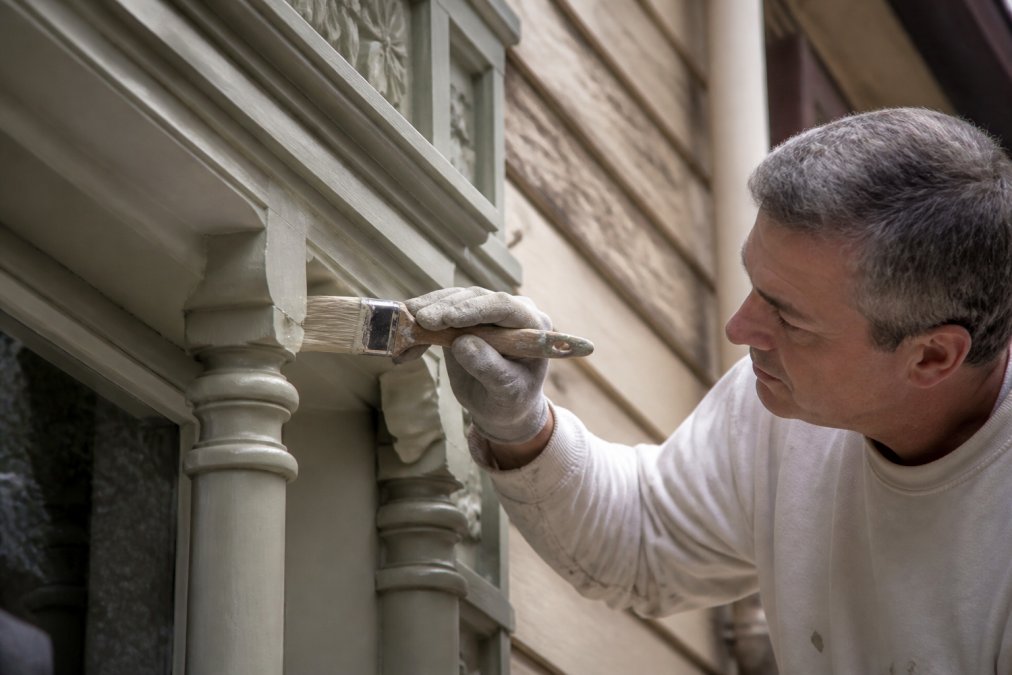
Period homes demand different preparation and application techniques. Surface assessment and appropriate preparation are foundational.
Inspect existing finishes for stability, multiple layers, and lead content, this determines preparation strategy. On heritage timber, avoid aggressive sanding; specialists use hand scraping, heritage-suitable chemical strippers, or selective sanding only where necessary.
Substrate repair comes next. Heritage timber shrinks and moves with moisture; masonry develops cracks and spalling; plaster becomes unstable. Repairing these issues before painting is non-negotiable. Filling cracks with modern caulk that doesn’t move with the building will fail within months. Heritage contractors use flexible, breathable products that accommodate the building’s natural movement.
Primer selection matters more in heritage work than standard painting. The primer must suit the substrate, timber, masonry, or plaster each need different systems. Using the wrong primer can trap moisture, accelerate decay, or cause adhesion failure. Heritage contractors understand these nuances; standard painters often don’t.
Period-accurate colour schemes aren’t just aesthetic, they’re part of heritage conservation. Using colours consistent with the building’s era respects its architectural integrity and often looks better than modern alternatives. Colour consultation during planning prevents expensive repainting later.
Application technique reflects the substrate. Heritage timber trim with decorative detailing requires careful brushwork to preserve moulding definition. Masonry needs paint systems that allow the material to breathe, preventing moisture trapping. Multiple thin coats outperform single heavy coats on heritage substrates, even though they take longer.
Cost of Heritage Home Restoration Painting
Heritage painting costs more than standard painting, and understanding why helps you budget realistically.
The primary cost drivers are surface preparation, substrate repair, and specialised materials. A heritage property with multiple paint layers, lead paint, unstable plaster, and decorative finishes requires 2-3 times the preparation time of a standard home. This isn’t padding, it’s necessary work that determines whether the paint lasts 5 years or 20.
Specialised materials add cost. Period-appropriate paint systems, breathable primers, flexible caulks, and protective coatings for heritage substrates cost more than standard products. Using the right materials prevents costly failures and premature repainting.
Colour consultation, site assessment, and council approval coordination are services included in professional heritage restoration but absent from basic painting quotes. These services prevent mistakes that cost thousands to fix.
For a ballpark understanding, heritage painting typically costs more than standard residential painting, depending on the property’s condition and complexity. A property with extensive lead paint, structural issues, or ornate detailing will be at the higher end. Simpler heritage properties with stable existing finishes cost less.
Getting multiple quotes helps you understand the variation. Quotes should itemise preparation, repair, materials, and application separately so you can see where costs differ. The cheapest quote often reflects underestimation of heritage complexity rather than efficiency, a red flag worth investigating.
Budget for heritage painting as an investment in the building’s longevity, not just its appearance. The cost difference between budget and specialist work often recovers itself through avoided future repairs and extended paint durability.
How to Choose the Right Heritage Painting Contractor
Selecting a heritage painting contractor requires different criteria than choosing a standard painter. You’re not just buying labour, you’re buying expertise that protects your property.
Start with heritage-specific experience. Ask how many heritage properties the contractor has worked on, what types of heritage work they’ve completed, and whether they have references from similar projects. General painting experience doesn’t translate to heritage expertise. A contractor with 20 years of experience painting new homes hasn’t learned the skills heritage restoration demands.
Verify their understanding of substrate-specific work. Can they explain the difference between preparation for heritage timber versus masonry? Do they understand breathable paint systems and why they matter? A contractor who can articulate these concepts has the knowledge you need. One who treats heritage like standard painting doesn’t.
Check their approach to colour selection. Will they help you choose period-accurate colours, or are you selecting from a chart alone?
Frequently Asked Questions
Do I need council approval to repaint a heritage-listed home?
Yes. Heritage-listed properties are protected under state heritage legislation, and most repainting work requires council approval before you begin. The specific requirements depend on whether the work is internal or external, and whether you’re changing the colour scheme. Contact your local council’s heritage adviser early in the planning process. Experienced heritage painting contractors understand these approval pathways and can guide you through the documentation needed.
What qualifications should heritage painting contractors hold?
Look for painters with demonstrated experience in heritage restoration, professional liability insurance, and knowledge of period-appropriate materials and techniques. Many hold qualifications in substrate repair, lead paint removal, and conservation guidelines. Contractors familiar with timber restoration, masonry repair, and traditional painting methods are better equipped to handle the complexities of period homes. Ask for references from previous heritage projects and verification of insurance coverage.
What is the difference between standard residential painting and heritage restoration?
Heritage restoration demands specialised knowledge of original building materials, period-accurate colour schemes, and conservation techniques that standard painters may not possess. Heritage work involves careful substrate repair, lead paint removal using eco-friendly methods, and application of protective coatings that preserve architectural integrity. Surface preparation is more intensive, and colour matching to historic palettes requires expertise. Heritage painters also navigate regulatory compliance and work to maintain the aesthetic and structural character of period properties.
How much does heritage home restoration painting typically cost?
Costs vary significantly based on property size, condition, complexity of surface preparation, and whether lead paint removal is needed. Factors include scaffolding requirements for multi-storey facades, extent of substrate repair, and specialist materials used. Contact heritage painting contractors for a site assessment and detailed quote. Experienced contractors can provide transparent cost guidance after evaluating your specific project requirements.
What happens if I’m not happy with the finish or the colour doesn’t work out?
Professional heritage painting contractors typically stand behind their work and address issues promptly. Before work begins, confirm their warranty terms and revision policy in writing. Many offer colour consultation services to ensure the final result matches your vision before painting starts. If you’re uncertain about colour selection, work with contractors who provide colour styling advice and sample applications on your property. This reduces the risk of costly repainting later.