

Sep 2026 Kitchen Cupboard Spray Painting: What to Know
Table of Contents
- Why Kitchen Cupboard Spray Painting Transforms Your Space
- The Spray Painting Process Explained
- How Long Does Kitchen Cupboard Spray Painting Take
- Kitchen Cabinet Painting Cost Estimate and Budget Planning
- Questions to Ask Before Hiring House Painters
- Durability and Maintenance of Spray-Painted Cabinetry
- DIY vs Professional Cabinet Spray Painting
- Conclusion
- Frequently Asked Questions
Last Updated: September 26, 2026
Why Kitchen Cupboard Spray Painting Transforms Your Space
A tired kitchen doesn’t need a complete renovation. Kitchen cupboard spray painting refreshes your entire room in weeks, not months, and costs a fraction of replacement cabinetry. The transformation is dramatic: dull, dated cupboards become modern focal points with a flawless finish that looks factory-fresh.
Kitchen cupboard spray painting offers a middle ground: professional spray finishes deliver durability and aesthetics that hand-painting cannot match, protecting your investment while giving design control that off-the-shelf replacements don’t offer.
What separates a lasting result from a disappointing one comes down to preparation, equipment, and expertise. This guide covers the process, costs, and how to choose a painter who delivers lasting results.
The Spray Painting Process Explained
Kitchen cupboard spray painting is a multi-stage process beginning long before paint touches your cupboards and continuing well after the final coat dries.
The process starts by identifying your existing finish: factory polyurethane (requiring aggressive sanding), laminate, or veneer surfaces each demand different preparation approaches.
Surface Preparation and Sanding
Thorough cleaning with degreaser removes grease and residue that prevent paint adhesion; rushing this step causes paint to chip within months.
Sanding follows: 120-150 grit for factory finishes, gentler sanding for laminate or veneer. The goal is dulling gloss for adhesion, not removing the finish entirely.
Professional painters know which surfaces need primer (timber typically does) and which can go straight to topcoat if properly prepared.
Priming and Coating Application
A quality primer seals the surface and provides a uniform base for topcoat, non-negotiable for timber or bare surfaces.
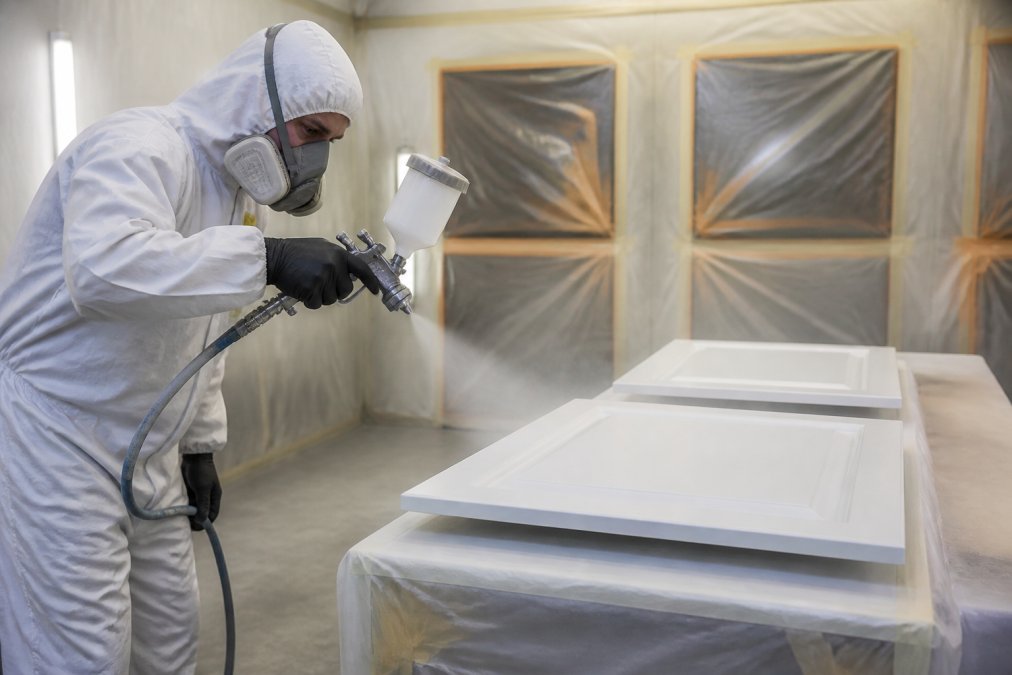
Spray application requires precision in controlled environments with drop sheets, masking tape, and plastic sheeting to prevent dust contamination and overspray.
Professional finishes use 2-pack or water-based polyurethane, which resist chipping far better than single-pack paints. Spray application creates thin, even coats; hand-brushing leaves visible marks and uneven coverage.
Two topcoats over primer is standard; each requires proper drying time between applications to prevent adhesion problems.
Ask your painter about their spray booth setup. A proper booth with air filtration prevents dust from landing on wet paint and protects your home from overspray. This is a hallmark of professional work.
How Long Does Kitchen Cupboard Spray Painting Take
The timeline depends on cupboard volume, existing finish, and whether you need colour consultation.
The timeline depends on cupboard volume, existing finish, and whether you need colour consultation.
The actual spray application, the visible work, might take 3-5 days depending on cupboard count and complexity. But that’s just one part of the process. Surface preparation often takes longer than spraying. If your cupboards have multiple layers of old paint or a stubborn factory finish, sanding can take a week or more.
Curing time is critical and often overlooked. Paint feels dry to the touch within hours, but full hardness takes 7-14 days depending on the coating system used. Your cupboards shouldn’t be subjected to heavy use, opening and closing repeatedly, placing hot pans, or cleaning aggressively, until they’re fully cured.
Timeline depends on kitchen size and painter availability. Professional painters often work in phases to minimise disruption.
Plan for 2-4 weeks total, but expect most of that time to be preparation and curing. The visible spray work is typically just a few days.
Kitchen Cabinet Painting Cost Estimate and Budget Planning
Cost varies by cupboard size, existing finish, and kitchen complexity. Understanding the cost breakdown helps you identify fair quotes.
Cost Breakdown by Cabinet Volume
Cost varies by cupboard size, existing finish, and kitchen complexity. Understanding the cost breakdown helps you identify fair quotes.
Factors That Increase Cost
Existing finish complexity: Factory finishes require aggressive sanding; expect an additional 15-25% for stubborn finishes.
Surface damage or repairs: Minor repairs add $200-$500; extensive damage adds $1,000+.
Hardware removal and reinstallation: Typically $150-$400 depending on complexity.
Colour consultation: Professional colour advice costs $200-$400.
Accessibility and site conditions: Restricted access or poor ventilation may add $300-$600.
Rush timelines: Expedited scheduling incurs a 10-20% premium.
What’s Typically Included vs. Extra
Standard inclusions: site visit, colour consultation, surface preparation, primer, two topcoats, home protection, hardware removal/reinstallation, and aftercare advice.
Common extras: splashback/wall painting, benchtop refinishing, drawer box interiors, and touch-up paint.
Comparing Quotes Fairly
A quote significantly below market rate often reflects shortcuts: single-pack paint, inadequate preparation, no home protection, rushed application, or no warranty.
Mid-range pricing reflects proper process and quality materials. Premium pricing may include extended warranties or specialised finishes.
If a quote is significantly below market rate, ask specifically what’s being cut. Request details on coating type, preparation steps, and warranty. A painter confident in their work will answer transparently. Vague answers are a red flag.
Getting an Accurate Quote
Provide painters with: exact cupboard count, current finish type, condition, desired finish, colour choice, kitchen layout, and site conditions for accurate quotes.
The more detail you provide, the more accurate the quote. Vague requests like “paint my kitchen cupboards” invite vague pricing. Specific briefs allow painters to quote confidently and help you compare fairly.
Questions to Ask Before Hiring House Painters
Ask about experience: How many kitchens have they spray-painted? Can they show before-and-after photos and references?
Ask about their process: home protection, preparation steps, coating system, and warranty if the finish fails.
Clarify timeline: start date, project duration, phased work options, and how they handle unexpected issues.
Clarify what’s included: preparation, hardware removal/reinstallation, and colour consultation.
Ask about work hours and how they minimise disruption, especially for commercial spaces.
Ask about aftercare: maintenance requirements, curing period, and what to avoid initially.
Painters worth hiring answer these questions thoroughly; they’re confident in their consistent process.
Durability and Maintenance of Spray-Painted Cabinetry
Aftercare is as important as application, it’s the difference between a finish lasting a long time or deteriorating prematurely.
Why Spray-Painted Finishes Last Longer
2-pack polyurethane finishes resist moisture, heat, and daily wear far better than single-pack paints. Spray application creates thinner, more even coats that cure uniformly and resist chipping.
Water-based polyurethanes offer similar durability with lower odour and faster drying, though curing takes slightly longer (10-14 days vs. 7-10 days).
Finish longevity reflects preparation quality. Poor preparation causes paint to peel or chip within 12-18 months, regardless of coating quality.
The Critical First 7-14 Days: Curing Phase
Paint feels dry within 24 hours, but full hardness takes 7-14 days depending on coating system and ambient conditions.
During curing: minimise cupboard access, avoid hot items on surfaces, maintain stable humidity, don’t clean aggressively, and ensure adequate ventilation.
After 7-14 days, cupboards are fully cured. Maintain gentle handling habits to keep the finish looking fresh.
Routine Cleaning and Care
Routine care: clean weekly with soft cloth and mild soap, avoid harsh chemicals, wipe spills immediately, skip furniture polish, and handle gently.
Managing Heat and Humidity
Use range hood while cooking and 10-15 minutes after. Maintain humidity between 30-60%. Avoid placing cupboards directly above heat sources.
Addressing Minor Damage
Use provided touch-up paint for minor chips. Fine scratches can be buffed with furniture cream. Address larger damage promptly to prevent moisture ingress.
Keep your painter’s contact details and the exact paint code for your cupboards. If you ever need repairs or repainting, having this information makes the process seamless. Some painters provide a care card with maintenance tips and contact information, ask for one if it’s not offered.
Expected Lifespan and When to Repaint
With proper care, a professional spray finish can offer long-lasting results. You may notice the finish beginning to show wear over time, such as minor dulling, fine scratches becoming more visible, or occasional chipping in high-traffic areas.
At this point, you have options:
- Continue with touch-ups and gentle maintenance (another 2-3 years of life)
- Refresh the finish with a new topcoat (often less expensive than a full respray, as preparation is minimal)
- Fully respray if the finish is heavily damaged or you want a colour change
A full respray can be a cost-effective option compared to kitchen replacement.
Your spray-painted cupboards are an investment that pays dividends for a decade or more. The first two weeks of careful curing and ongoing gentle maintenance are what determine whether your finish looks fresh for 15 years or starts failing at year 3. Treat your cupboards with care, and they’ll reward you with lasting beauty.
DIY vs Professional Cabinet Spray Painting
DIY spray painting appeals to budget-conscious homeowners. Renting spray equipment and buying paint costs less than hiring professionals. But the hidden costs and risks often outweigh the savings.
Conclusion
Kitchen cupboard spray painting is one of the highest-impact renovations you can undertake. It transforms your space without the cost or disruption of full kitchen replacement. The difference between a lasting result and a disappointing one comes down to preparation, coating quality, and technique, exactly what professional painters deliver.
Frequently Asked Questions
Is it better to spray paint or hand paint kitchen cupboards?
Spray painting delivers a smoother, more durable finish than hand painting because it applies a uniform coating without brush marks or inconsistencies. The finish is more resistant to chipping and wear, especially on high-traffic kitchen cabinetry. Hand painting is cheaper but produces visible lap marks and a less professional appearance. For kitchen cupboards, spray painting is the superior choice if durability and aesthetics matter.
How long do spray-painted kitchen cupboards last?
Professional spray-painted kitchen cupboards can offer long-lasting results with proper maintenance. The longevity depends on the quality of the 2-pack polyurethane coating, surface preparation, and how well you care for them. Regular cleaning with a soft cloth and avoiding abrasive scouring pads will extend the life significantly. Cheaper finishes or poor preparation may fail sooner, so choosing an experienced painter is crucial for durability.
Can you spray paint laminate kitchen cupboards?
Yes, laminate cupboards can be spray painted, but they require thorough surface preparation. The laminate surface must be sanded and primed properly so the paint adheres correctly. Without proper preparation, the finish will chip and peel. A professional painter knows how to treat laminate surfaces to ensure the spray coating bonds effectively and lasts. This is one reason professional application matters more for laminate than solid timber.
Do I need to remove my cupboard doors for spray painting?
Yes, professional painters remove cupboard doors before spray painting. This allows them to access all surfaces evenly, apply coatings consistently, and cure the finish properly without obstruction. Doors are painted in a controlled spray booth environment, ensuring a factory-quality finish. Removing doors also protects your kitchen from overspray and dust. After curing, doors are rehung carefully, and hardware is reinstalled.