

Oct 2026 Best Paint Finish for Kitchen Cabinets: 2026 Guide
Table of Contents
- Understanding Sheen Levels and Paint Finish Options
- Satin vs. Semi-Gloss: The Great Debate for Kitchen Cabinets
- Water-Based vs. Oil-Based Enamels: Which Performs Better
- How to Prep Kitchen Cabinets for Painting
- Durable Paint for Kitchen Cabinets: Material Selection
- Application Methods: Spraying vs. Brushing
- Kitchen Cupboard Spray Painting Cost and Considerations
- Durability and Cleanability Factors That Matter
- Frequently Asked Questions
Last Updated: October 1, 2026
Understanding Sheen Levels and Paint Finish Options
When you’re choosing a paint finish for kitchen cabinets, you’re really choosing how much light that surface will reflect and how easy it will be to clean. Sheen levels range from flat (no shine) to high-gloss (mirror-like), and each one behaves differently under the wear and tear of daily kitchen use. The best paint finish for kitchen cabinets depends on balancing durability, cleanability, and the aesthetic you want.
Kitchen cabinets take a beating. Hands touch them constantly. Grease splatters. Moisture hangs around. Your choice of sheen level directly affects how well the paint handles all of that.
Matte and Flat Finishes
Matte and flat finishes absorb light, creating a soft, sophisticated appearance. They hide surface imperfections beautifully, which makes them popular for feature walls and living spaces where traffic is lighter.
For kitchen cabinets, though, matte finishes are risky. They don’t clean well. Fingerprints show up easily, and when you try to wipe them away, you often smudge the finish rather than clean it. Grease and moisture can penetrate the surface more easily than with glossier finishes. In a kitchen environment, a matte finish on cabinetry will look tired and marked within months.
Satin Finish
Satin sits in the middle of the sheen spectrum, offering a subtle glow without the shine of semi-gloss or gloss. It reflects some light, which gives cabinets depth and dimension while still looking elegant rather than plastic-y.
This is where many homeowners land when they want a balance. Satin finishes are reasonably easy to clean, you can wipe them down without worrying that every fingerprint will be visible. They’re durable enough for kitchen use, though they’re not quite as tough as semi-gloss or high-gloss options. Satin also tends to hide minor imperfections in the prep work better than glossier finishes do.
The catch is that satin finishes require careful surface preparation. If the underlying wood or existing paint has any grain, texture, or unevenness, it will show through a satin finish more obviously than it would through a matte finish.
Semi-Gloss and High-Gloss Finishes
Semi-gloss delivers noticeable shine and excellent durability. High-gloss is even shinier and tougher. Both finishes reflect light significantly, which makes kitchen cabinets look crisp and modern.
These glossier finishes excel at cleanability. You can wipe them down aggressively without worrying about damaging the surface. Grease and moisture bead up rather than soaking in. They’re the most durable option for a high-traffic kitchen where appearance matters long-term.
The trade-off is that glossy finishes show every imperfection, dust, fingerprints, brush marks, sanding scratches. They demand meticulous surface preparation and skilled application. A semi-gloss or high-gloss finish applied poorly will look worse than a satin finish applied well.
Satin vs. Semi-Gloss: The Great Debate for Kitchen Cabinets
This is where the real decision happens. Both satin and semi-gloss work for kitchen cabinets, but they solve different problems.
Satin is your choice if you prioritize appearance and are willing to accept slightly less durability. It looks warmer and less institutional than semi-gloss. It hides minor prep imperfections. It’s forgiving during application, a skilled painter can make satin look flawless even on a moderately challenging substrate.
Semi-gloss is your choice if durability and cleanability are non-negotiable. It stands up to heavy use, frequent cleaning, and moisture exposure better than satin does. It’s the industry standard for kitchen cabinetry in commercial settings for a reason. The downside is that semi-gloss demands perfect prep work and expert application. Any flaw in the surface preparation will be visible.
For most homeowners in Sydney kitchens, satin offers the sweet spot.
Water-Based vs. Oil-Based Enamels: Which Performs Better
This choice has shifted dramatically in recent years. Water-based enamels have improved so much that they now match or exceed the performance of traditional oil-based paints for kitchen cabinets.
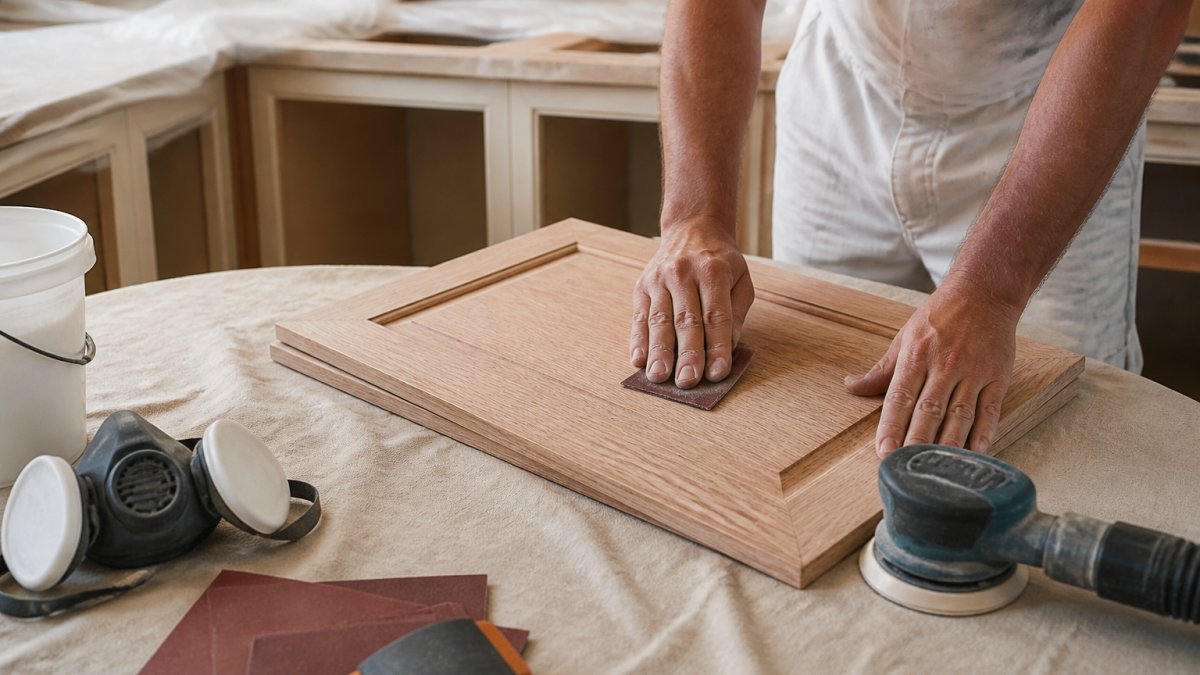
How to Prep Kitchen Cabinets for Painting
Surface preparation determines whether your paint finish will last five years or fifteen. Skip this step or do it halfway, and even the best paint will fail.
Degreasing and Surface Cleaning
Kitchens are greasy. That grease sits on your cabinet surfaces, and paint won’t stick to grease.
Sanding and Deglosser Application
If your cabinets have an existing finish, you need to break that gloss so the new paint can grip the surface.
Priming: Why It Is Non-Negotiable
Primer is not optional. It’s the layer that makes everything else work.
Durable Paint for Kitchen Cabinets: Material Selection
Not all paints are created equal. Cabinet-specific paints are formulated differently than standard interior paints because cabinets demand more durability.
Urethane and Alkyd Resins
Urethane-modified acrylics and waterborne alkyds are the gold standard for kitchen cabinet painting. These formulations add extra hardness, adhesion, and moisture resistance compared to standard acrylic paints.
Non-Yellowing Formulas and UV Protection
Yellowing is a real problem with some cabinet paints, particularly oil-based formulations exposed to sunlight or heat. Modern non-yellowing formulas use UV-stable resins that resist discolouration over time.
Application Methods: Spraying vs. Brushing
How you apply the paint matters as much as which paint you choose.
Kitchen Cupboard Spray Painting Cost and Considerations
Professional spray painting of kitchen cabinets involves more than just paint. It includes thorough preparation, masking, multiple coats, and careful cleanup.
Durability and Cleanability Factors That Matter
Once your cabinets are painted, how they perform depends on the paint you chose and how well it was applied.
Scrub Resistance and Stain Resistance
Scrub resistance is how well the paint withstands aggressive cleaning. Cabinets with high scrub resistance can be wiped down repeatedly without the finish breaking down or becoming dull.
Moisture Resistance and Long-Term Aging
Kitchens are humid. Steam from cooking, moisture from dishwashers, and humidity from daily life all stress paint finishes. Moisture resistance is how well the paint resists water penetration and the swelling or warping that can result.
Frequently Asked Questions
What do professional painters use to paint kitchen cabinets?
Professional painters typically use waterborne alkyd enamels, urethane-modified acrylics, or two-pack polyurethane systems for kitchen cabinets. These formulations offer superior adhesion, durability, and resistance to moisture and cleaning. Waterborne alkyds like Benjamin Moore Advance provide factory-smooth finishes with excellent levelling. Urethane-modified products such as Sherwin-Williams Emerald resist yellowing and chipping in high-traffic areas. The choice depends on the desired finish, substrate compatibility, and project timeline.
Which is the best paint finish for kitchen cabinets?
Satin and semi-gloss finishes are the best for kitchen cabinets. Satin offers a subtle sheen that hides minor imperfections whilst providing good cleanability and durability. Semi-gloss delivers superior moisture resistance and scrubbability, making it ideal for high-traffic kitchens where frequent cleaning occurs. The choice between them depends on your aesthetic preference and how much cleaning your cabinets will endure. Matte finishes are not recommended for kitchens due to poor stain and moisture resistance.
Should kitchen cabinets be painted gloss or satin?
Satin is generally preferred over high-gloss for kitchen cabinets because it provides excellent durability and cleanability whilst being less reflective and forgiving of brush marks or dust particles. High-gloss finishes are extremely durable but show every fingerprint and imperfection, making maintenance more demanding. Semi-gloss offers a middle ground with superior moisture resistance for kitchens that experience heavy steam and splashing. Your choice should balance aesthetics with your willingness to maintain the finish.
How to prep kitchen cabinets for painting?
Proper preparation is essential for paint adhesion and longevity. Begin by degreasing all surfaces with a degreaser to remove kitchen oils and residue. Sand the cabinet surfaces with 120-150 grit sandpaper to scuff the existing finish and improve bonding. Apply a deglosser if needed for high-gloss surfaces. Fill any gaps or damage with wood filler. Prime all surfaces with a bonding primer designed for cabinetry. Allow proper curing time between each step. This preparation ensures the paint adheres properly and achieves a professional, durable finish.
Is matte paint durable enough for kitchen cupboards?
Matte paint is not recommended for kitchen cupboards. Whilst it provides a modern aesthetic, matte finishes offer poor stain resistance, moisture resistance, and cleanability. Kitchen environments involve frequent splashing, steam, and grease exposure that matte finishes cannot withstand effectively. The finish will show water marks, stains, and dirt easily, and scrubbing to clean it risks damaging the paint. Satin, semi-gloss, or gloss finishes are far more practical for kitchen applications.
What makes professional spray painting last longer than DIY applications?
Professional spray painting achieves superior durability through meticulous surface preparation, proper substrate compatibility assessment, correct primer selection, and optimal spray application technique. Professionals ensure even film thickness, complete coverage without brush marks, and proper curing conditions. They use industrial-grade materials like urethane-modified enamels or two-pack polyurethane systems that offer better adhesion and durability than standard interior paints. Professional teams also understand how climate and existing finishes affect paint longevity, adjusting their approach accordingly for lasting results.
How long does kitchen cabinet paint typically last?
Kitchen cabinet paint durability depends on finish quality, preparation, and usage. Professional applications using premium enamels and proper preparation typically last 5-10 years or longer in standard kitchens. High-traffic commercial kitchens may require repainting every 3-5 years. Factors affecting longevity include moisture exposure, cleaning frequency, heat from appliances, and the quality of the original substrate preparation. Satin and semi-gloss finishes generally outlast matte options. Proper maintenance, including gentle cleaning and avoiding harsh abrasives, extends the paint’s lifespan significantly.
What is the best paint finish for kitchen cabinets in Australia?
In Australian kitchens, satin and semi-gloss finishes perform best due to the climate’s humidity variations and the frequency of kitchen cleaning. Semi-gloss is particularly suitable for humid coastal regions where moisture resistance is critical. Waterborne alkyd enamels and urethane-modified acrylics are ideal choices for Australian conditions as they resist yellowing from UV exposure and maintain durability in variable temperatures. These formulations dry quickly and provide excellent adhesion to existing finishes. Professional application ensures optimal performance and longevity in the Australian environment.